
RuleSense — AI Traffic Violation Detection, From Camera to Challan
Manual enforcement can't watch every junction, every hour, every day — and that gap shows up as undetected violations and rising accident risk. RuleSense automates violation detection directly from your existing camera infrastructure, generating evidence-ready alerts without adding officers to the street.
What RuleSense Detects Today
Wrong-Direction Detection
Automatically flags vehicles traveling against approved direction of flow
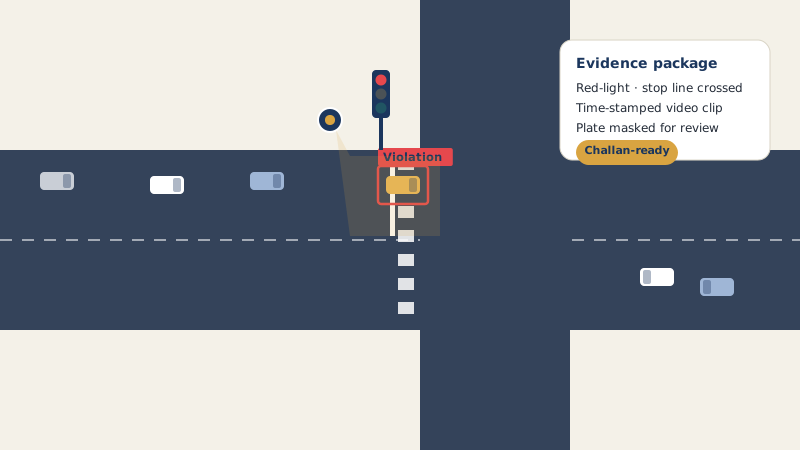
Red-Light & Stop-Line Violations
Detects signal-jumping and stop-line violations from existing junction cameras (also available standalone as RedLightSense — below)
Automated Evidence & Challan-Ready Alerts
Every detection generates timestamped, geo-tagged evidence — no officer has to witness the violation directly
No-Helmet Detection
Flags riders without a helmet from existing traffic camera feeds
Triple-Seat Riding
Detects more than two riders on a two-wheeler in a single frame
Over-Speeding
Flags vehicles exceeding the posted speed limit directly from video — no radar hardware required
From Detection to Challan
01
Detect
The camera feed is analysed continuously; a violation is flagged the moment it happens.
02
Capture
A time-stamped, geo-tagged evidence package is created with the video clip and still frames.
03
Review
Your team reviews each evidence package in the dashboard before any action is taken.
04
Issue
Approved cases are exported in a challan-ready format for your existing process.
Why Automate Enforcement
Consistent and impartial
The same rule is applied to every vehicle, every hour, backed by evidence.
Better use of officers
Officers spend their time on the roads where they are needed, not watching screens.
Transparent to citizens
Every notice is backed by a clip and frames that can be shown on request.
Protects camera investments
Runs on the junction, ANPR and red-light cameras already installed.
Starts small, scales up
Begin with one junction or one violation type and expand across the city.
Audit-ready
Role-based access and a full activity log for every case.
Expanding Violation Coverage
Coming SoonStandalone Modules
RedLightSense and SpeedSense run standalone — same engine, focused scope.
RedLightSense
Dedicated red-light and stop-line violation detection, deployable standalone on existing signal-camera infrastructure — automatic detection, evidentiary capture, challan-ready evidence, without adopting the full multi-violation suite on day one.
Learn how automated enforcement works →SpeedSense
AI speed-violation detection directly from video — no radar hardware, no additional field equipment. Deploy standalone for a focused speed-enforcement corridor, or as part of the full RuleSense suite.
Learn how automated enforcement works →Track Record
When Manual Enforcement Couldn't Keep Pace With a Fast-Growing City
A fast-growing coastal city was losing the fight against rising traffic violations. RuleSense deployed directly onto the city's existing ANPR and red-light-violation camera feeds across three key junctions — no new hardware required — and was fully operational in under two weeks, kicking off a one-month pilot.
~70%
drop in previously undetected violations
90%+
automated accuracy (self-declared), up from a 40–50% manual baseline
~80%
cut in manual enforcement workload
Following the pilot, the local traffic authority moved to expand the deployment beyond the initial three junctions.

Frequently asked questions
Which violations does RuleSense detect today?
Wrong-direction driving, red-light / stop-line violations, no-helmet riding, triple riding and over-speeding, each with automated, time-stamped evidence. Detection of no seatbelt, mobile-phone use, illegal parking and lane discipline is coming soon.
Do we need new cameras?
Usually not. RuleSense runs on existing junction, ANPR and red-light camera feeds, so most deployments start without new field hardware.
What evidence does each violation include?
A time-stamped, geo-tagged record with the video clip and still frames of the violation, ready for review and challan processing, so no officer needs to witness the violation directly.
Can we start with just red-light or speed enforcement?
Yes. RedLightSense (red-light and stop-line) and SpeedSense (video-based speed detection with no radar hardware) can be deployed on their own and expanded into the full RuleSense suite later.
How long does deployment take?
On existing camera feeds, deployment can be fast: in the pilot described on this page, RuleSense was operational across three junctions in under two weeks.