
PedestrianSense — Adaptive Pedestrian Crossing Intelligence
Fixed-timer pedestrian signals either make people wait too long or waste green time when no one's crossing. PedestrianSense reads actual pedestrian presence and demand in real time, so crossings respond to people — not a preset clock.
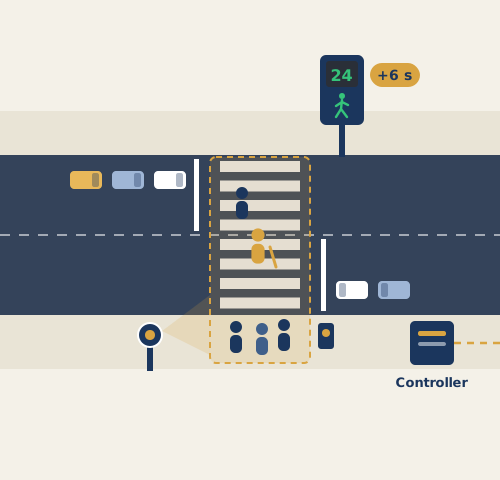
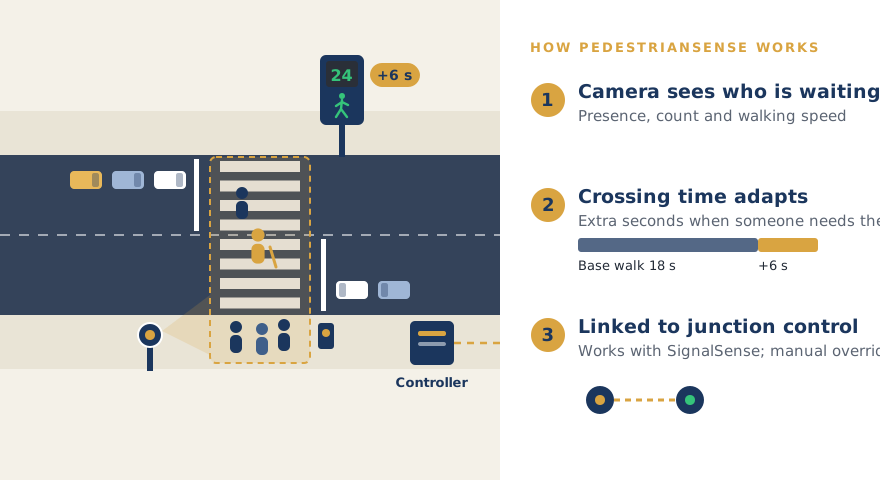
How PedestrianSense works
The Challenge
Pedestrian crossings on a fixed timer are a compromise by design — too short for anyone walking slower than average, too long when no one's actually there, and unable to respond when a crowd suddenly gathers. For vulnerable users — the elderly, visually impaired, or anyone crossing a wide, high-traffic junction — that mismatch is a real safety risk, not just an inconvenience. And every second a signal holds a phase with no pedestrian demand is throughput lost from vehicle traffic that didn't need to wait.
The Solution
PedestrianSense combines camera-based detection with physical crossing controls to manage pedestrian phases dynamically.
AI-Based Presence Detection
Camera-based sensing reads actual crossing demand, not an assumption
Adaptive Crossing Time
Signal timing adjusts to real pedestrian volume and crossing speed
Push-Button, Touchless Option
Pedestrians can trigger a crossing request directly, with or without physical contact
Audible Crossing Signal
Buzzer/acoustic alert supports visually impaired pedestrians
Coordinated With Junction Control
Integrates with SignalSense for crossings that are part of a broader adaptive junction
Manual Override Available
Traffic authorities retain full control whenever needed
Same DAIOS platform and detection engine behind SignalSense and the rest of TrafficIQ, designed for real-world, high-density pedestrian conditions.